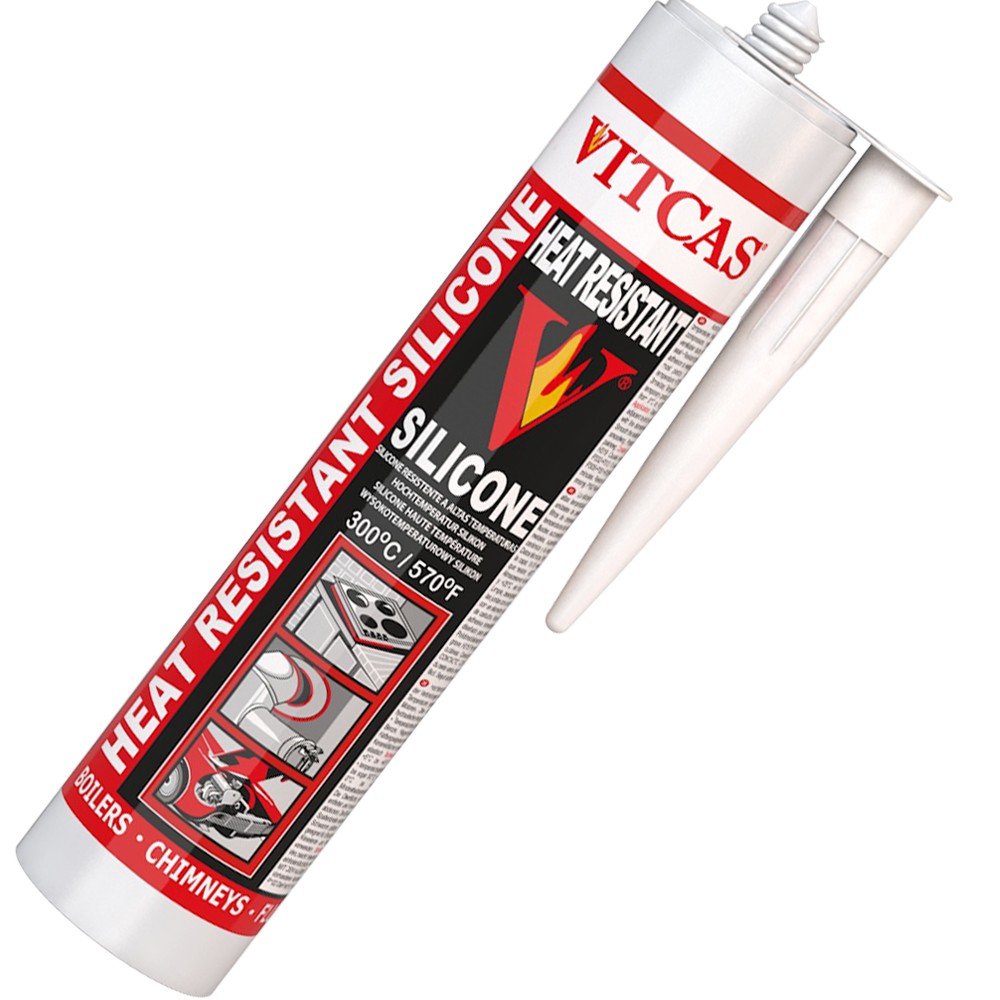
The temperature on the Vitcas data sheet helps assess the product, but it does not create a single scale of substitutes. Silicone, plaster, and mortar have different tasks and installation conditions. First, name the work the material is supposed to do, and only then compare its parameters with the actual location.
Start with the intended use
The appropriate flexible connection is made using Heat Resistant Silicone, rated up to 315°C. Heat Resistant Plaster, with resistance up to 650°C, creates a smooth finish on the specified substrates. The higher temperature of the plaster does not allow it to be used instead of silicone in any movable part.
Heat Resistant Tile Adhesive is an adhesive for compatible indoor tiling, with a declaration up to 1000°C. Selection includes the substrate, layer, and tile requirements. The adhesive parameter alone does not confirm the resistance of all wall materials.
High temperature does not change the type of product
Premium Fire Cement has described minor repair applications and resistance up to 1250°C. Fireplace Render is used for appropriate layers on masonry, up to 1400°C. A small repair compound and a thicker render layer do not automatically perform the same work.
Check the geometry as well as moisture and environmental conditions. An indoor material does not become a product for any winter exposure just because it is resistant to high temperature. Weather and thermal work requirements must be read separately.
The entire system requires its own assessment
The product temperature alone does not determine the temperature of the wood behind the cover or the fire resistance rating of the partition. Compare the data sheet with the device instructions and a layer plan. Also consider mounting, weight, required spaces, and material preparation.
Keep the name and variant instead of recording only the number of degrees. During the next purchase, it will be easier to reproduce the correct product without choosing a different compound just because its packaging shows a higher value.